Valid Names Results
Puto altimontanus Li & Xu, 2026 (Putoidae: Puto)Nomenclatural History
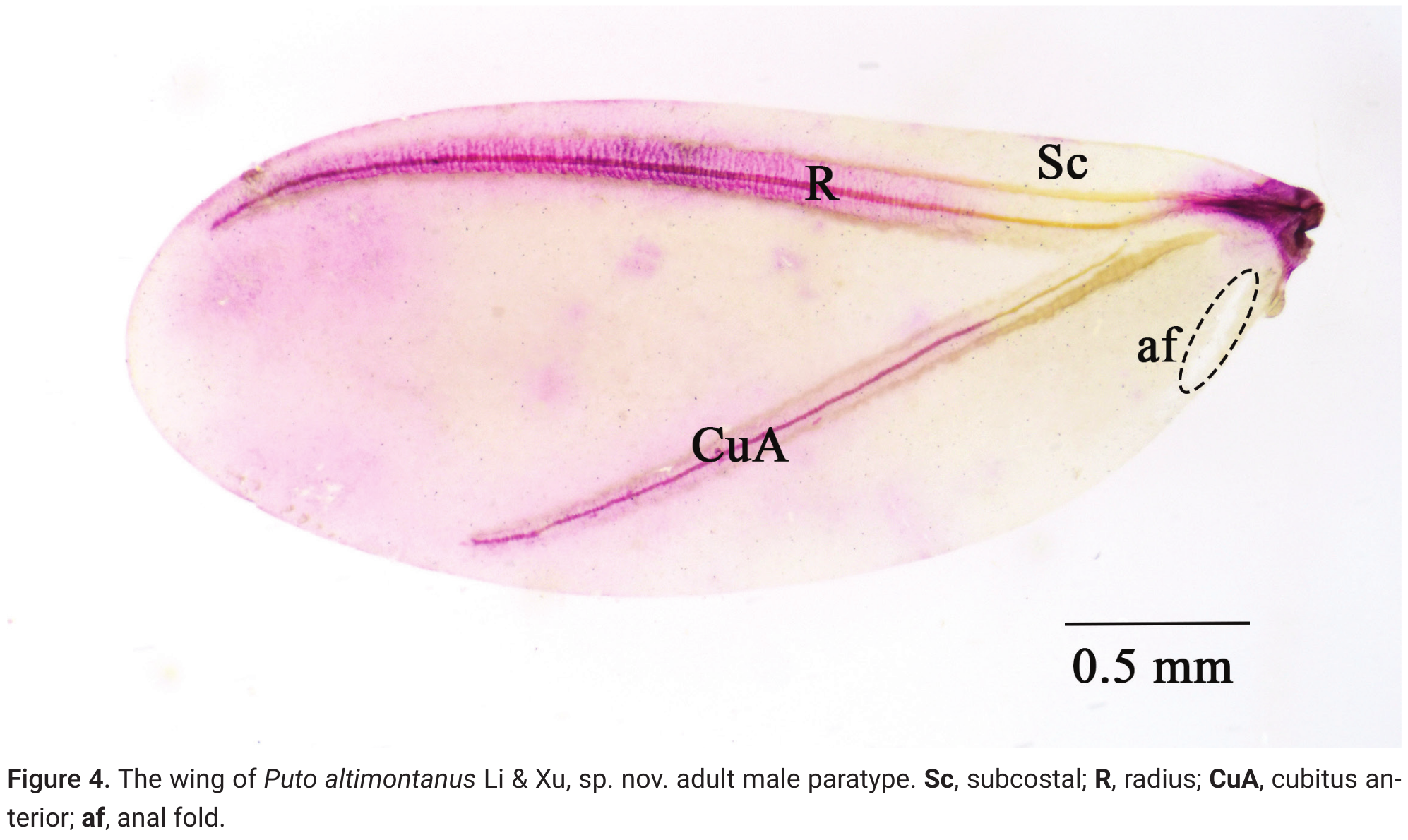
- Puto altimontanus Li & Xu 2026: 3. Type data: CHINA: Xizang Autonomous Region, Linzhi City, Bayi District, Lulang International Tourism Town (29°44′03″N, 94º43′21″E), altitude 3300 m; 08/11/2025; by Yu-ang Li. Holotype, both sexes, by present designation Type depository: Beijing: Forestry University, Beijing, China; accepted valid name Notes: Paratypes: China • 7 ♀♀ • 4 ♂♂; same data as holotype: 1 ♀ mounted together with holotype on 1 slide, 4 ♀♀ mounted singly on 4 slides, and 2 ♀♀ mounted together on 1 slide; 2 ♂♂ mounted singly on 2 slides, and 2 ♂♂ mounted together on each of 2 slides; 4 male forewings (from 2 of the above males) mounted together on 1 slide. Illustr.
Common Names
Ecological Associates
Hosts:
Families: 1 | Genera: 1
- Fagaceae
- Quercus semecarpifolia | LiZhZo2026
Geographic Distribution
Countries: 1
- China
- Xizang (=Tibet) | LiZhZo2026
Keys
Remarks
- Systematics: https://zoobank.org/A87F8D31-8CC3-4B42-9D69-3BCA50267007
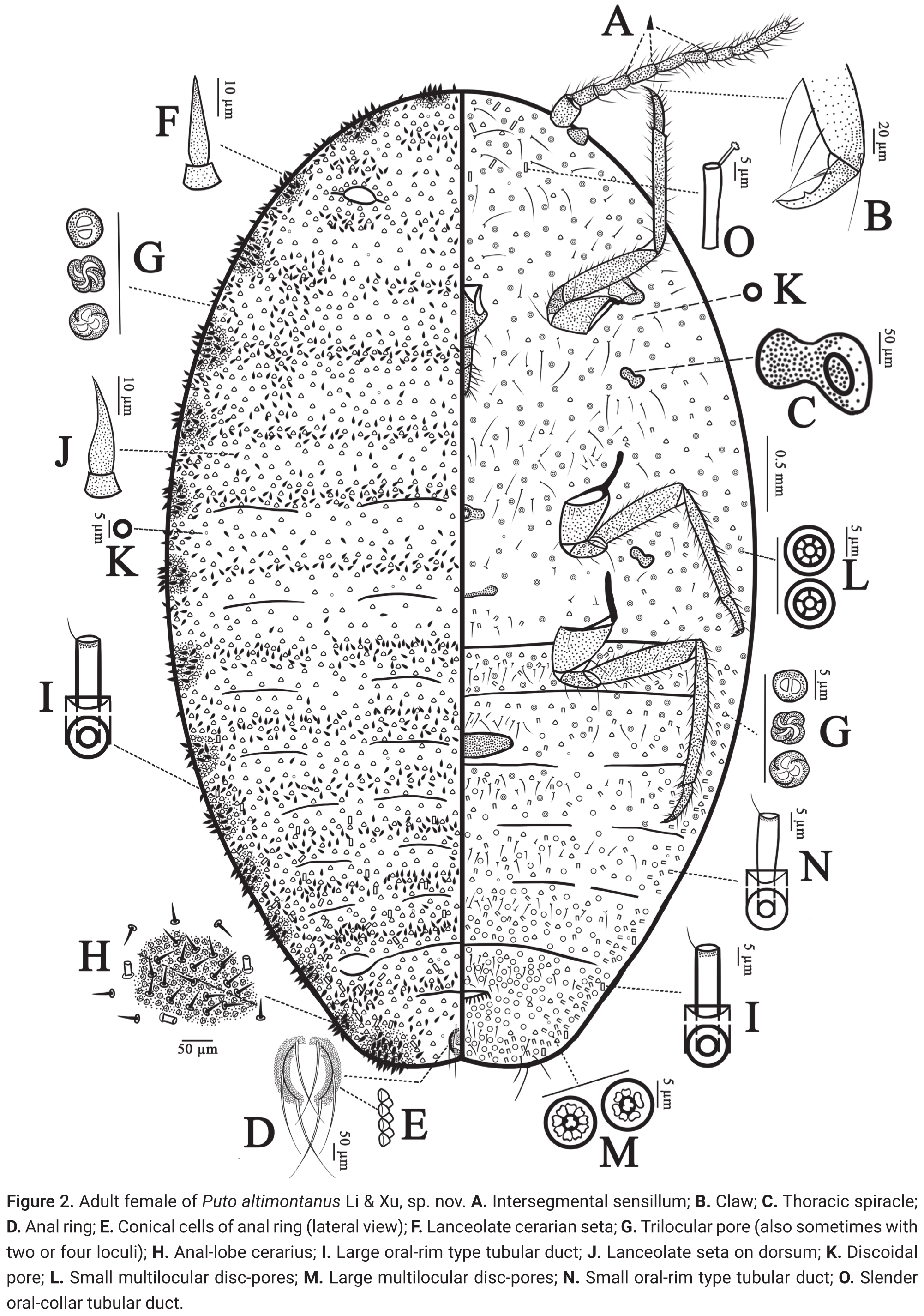
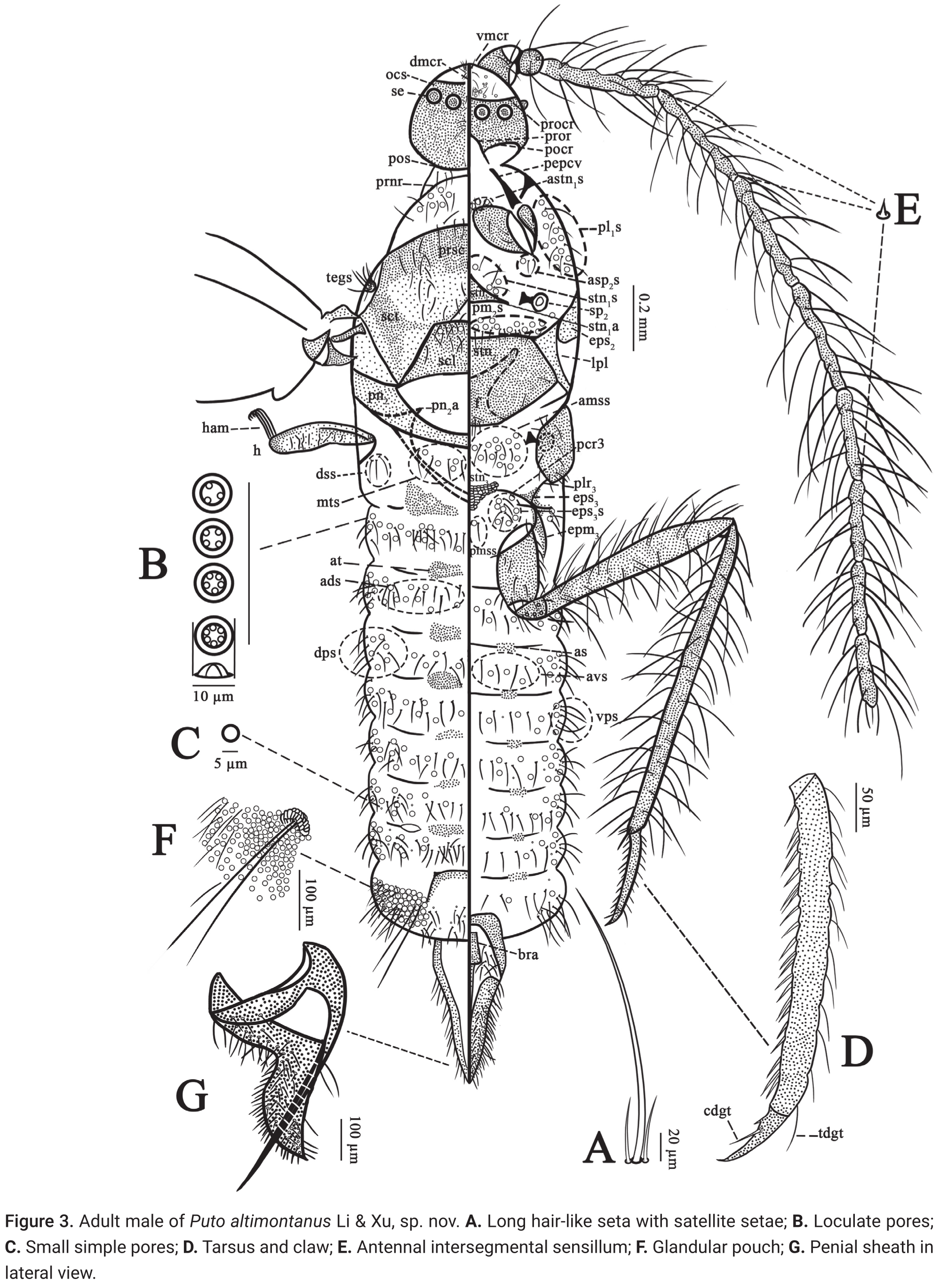
The adult female of P. altimontanus is closest to that of P. thailandicus Williams, 2004, based on a comparison using the key to Puto from the Old World by Zheng et al. (2025), in having the following character states: (i) oral-collar tubular ducts absent from cerarii; (ii) dorsum without additional dorsal cerarii; and (iii) venter without lanceolate setae. But P. altimontanus differs from P. thailandicus by having (contrasting character states in P. thailandicus given in parentheses): (i) cerarii numbering 16 basic pairs (cerarii probably numbering 17 basic pairs); and (ii) multilocular disc-pores of 2 sizes, each pore with 5, 6, 7 or 9 subcentral loculi only (with multilocular disc-pores of only 1 size, each pore with 8 subcentral loculi) (data of P. thailandicus are derived from Williams (2004)). In China, the adult female of P. altimontanus is also similar to the P. huangshanensis Wu, 2001, in having the following character states: (i) dorsum without additional dorsal cerarii; (ii) oral-rim tubular ducts absent from cerarii; (iii) circulus on abdominal segment III more than three times as wide as long; and (iv) anal ring bearing six acute setae. P. altimontanus differs from P. huangshanensis by having (contrasting character states in P. huangshanensis given in parentheses): (i) venter without lanceolate setae (lanceolate setae present on venter); and (ii) ostioles without setae on lips (ostioles with setae on lips) (data of P. huangshanensis are derived from Zheng et al. (2025)). (LiZhZo2026) The adult male of P. altimontanus differs from that of many Puto species by having five eyes on each side of the head. Most previously described adult males of Puto possess six or seven pairs of simple eyes, except the adult male of P. superbus has four pairs of simple eyes (Williams et al. 2011) (LiZhZo2026).
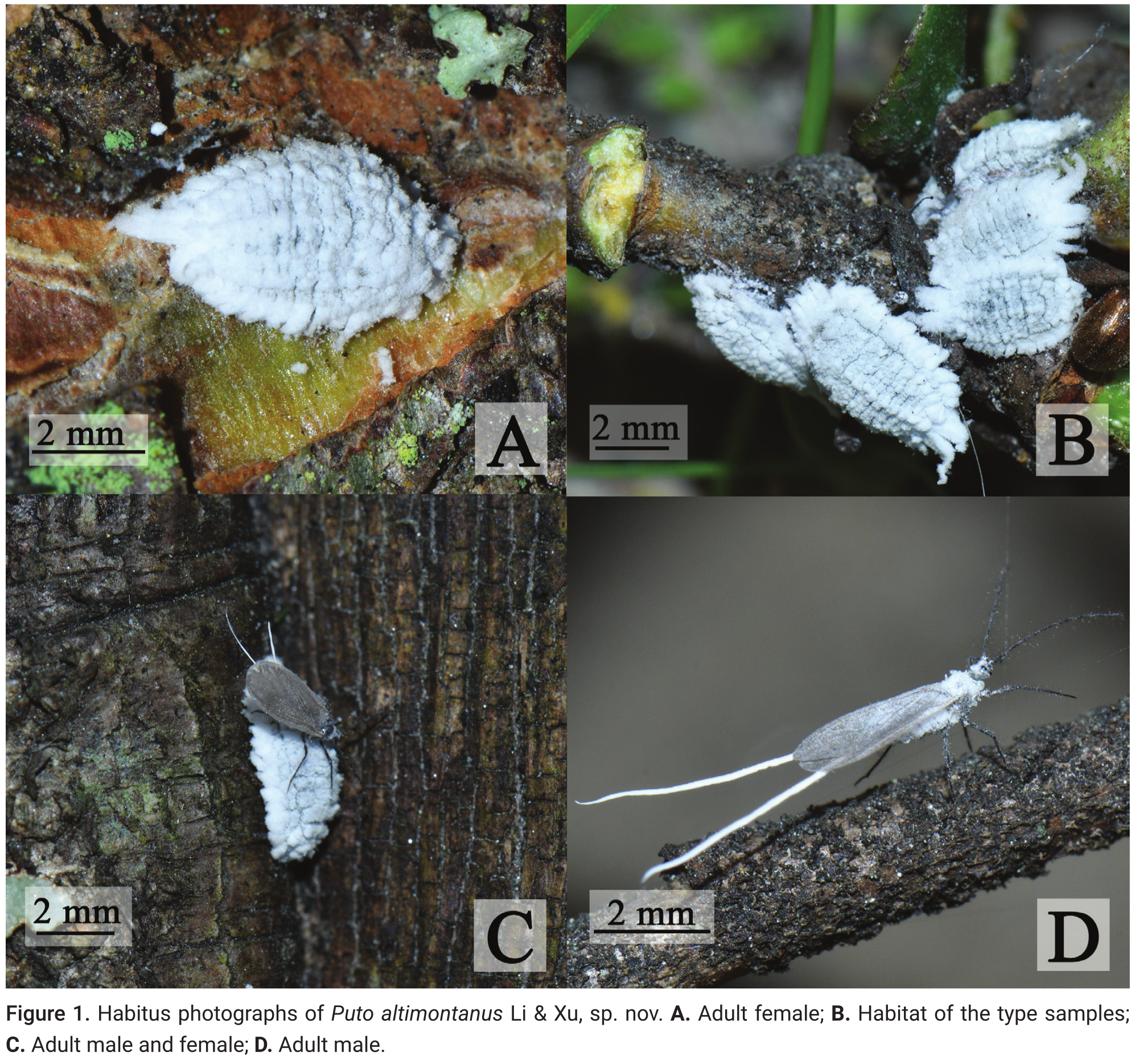
- Structure: Adult female body oval, dorsum densely coated in white wax, marginally extended into wax plates (approximately 15 or 16 pairs), venter thinly covered with mealy wax. Slide-mounted material (N = 7) (Fig. 2). Body 6.2–6.8 mm long and 3.3–3.5 mm wide. Antennae 9-segmented, each 1539–1662 μm long; segment III longest, Diagnostic characteristics. (i) circulus on abdominal segment III complete, more than three times as wide as long; (ii) small multilocular disc-pores abundant from head to abdominal segment IV; (iii) large multilocular disc-pores present from abdominal segment III to posterior end of abdomen; (iv) ostioles without setae on lips; (v) on dorsum, oral-rim type tubular ducts present around last seven cerarii, and across abdominal segments IV–VII; (vi) on venter, a few oral-collar tubular ducts present on anterior of head, and small oral-rim type tubular ducts present on abdomen and parts of thoracic segments II and III; and (vii) cerarii numbering 16 pairs. (LiZhZo2026) Adult male body midge-like; forewings gray; body coated with white wax; posterior abdomen with 2 long wax filaments, approximately 1.3 times body length. (LiZhZo2026)
- General Remarks: Detailed desdription, photographs and illustration in Li, et al., 2026
Illustrations
Citations
- LiZhZo2026: description, description of male, diagnosis, distribution, genebank, host, illustration, taxonomy, 3-12