Valid Names Results
Anotaspis paradisi Normark, Normark, and Amouroux, 2025 (Diaspididae: Anotaspis)Nomenclatural History
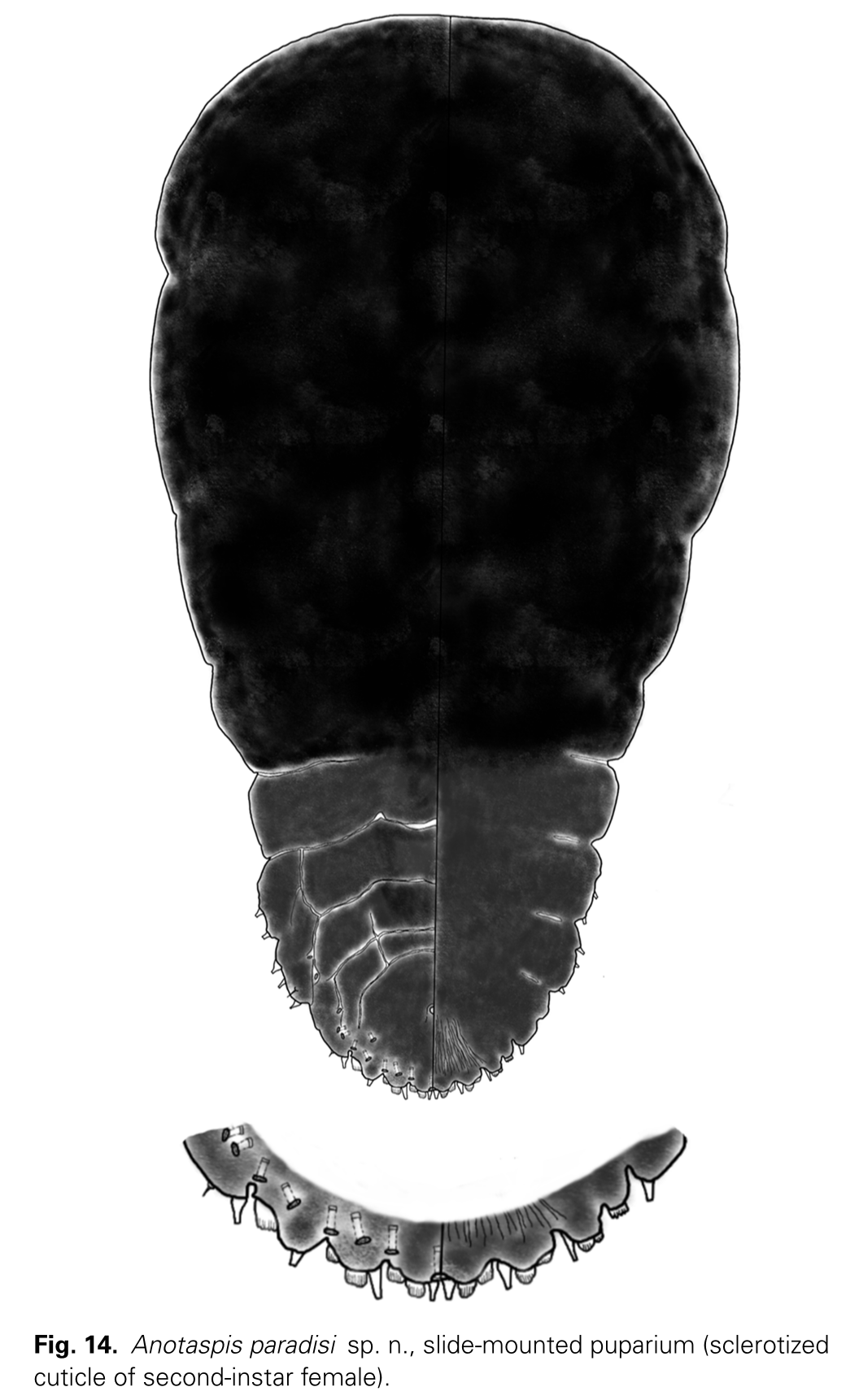
- Anotaspis paradisi Normark, Normark, and Amouroux 2025: 12. Type data: CHILE: Valparaiso, Parque Nacional La Campana, ex. Retanilla trinervia, 2/6/2019, coll. P. Amouroux. Holotype, female, by original designation Type depository: Santiago, Museo Nacional de Historia Natural de Chile, Santiago, Chile ; accepted valid name Notes: Paratypes: 1 adult female and 1 puparium, same data as holotype, slide PA960A-0520 (USNM) Illustr.
Common Names
Ecological Associates
Hosts:
Families: 2 | Genera: 2
- Anacardiaceae
- Lithraea caustica | NormarNoCa2025
- Rhamnaceae
- Retanilla ephedra | NormarNoCa2025
- Retanilla trinervia | NormarNoCa2025
Geographic Distribution
Countries: 1
- Chile
- O'Higgins | NormarNoCa2025
- Santiago | NormarNoCa2025
- Valparaiso | NormarNoCa2025
Keys
- NormarNoCa2025: pp.16 ( Adult (F) ) [Global key to Ancepaspidinae]
Remarks
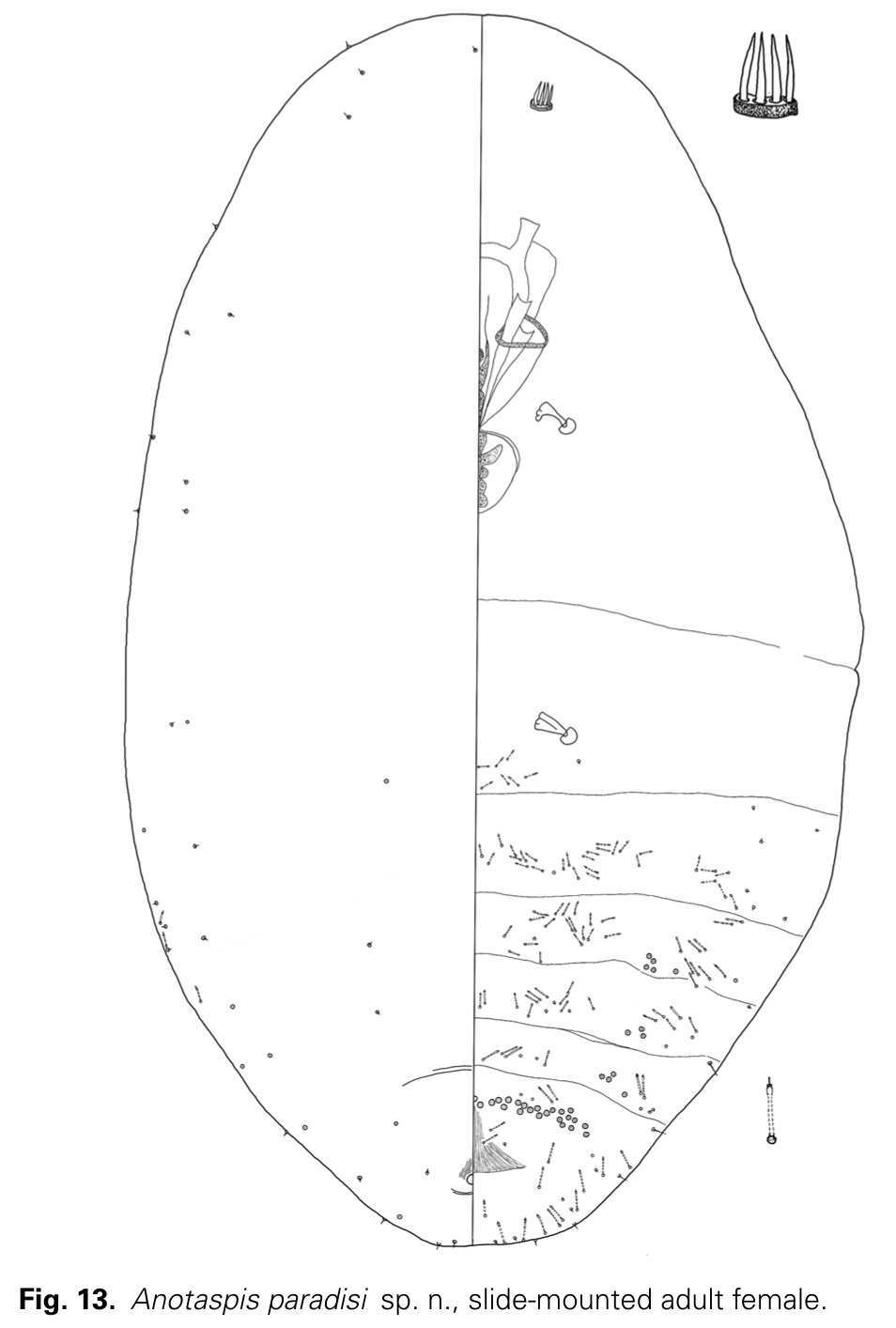
- Systematics: urn:lsid:zoobank.org:act:CE451F43-C4AE-4EAD-9F5F-7CFCF10676A4 The adult female of Anotaspis paradisi resembles that of A. particula in being pupillarial, with multisetose antennae and a simple oval shape, without any gland spines, plates, lobes, or other appendages, and without pores by the anterior or posterior spiracles. The adult female of A. paradisi differs from A. particula in having perivulvar pores and ventral microducts (absent in A. particula). (Normark et al. 2025)
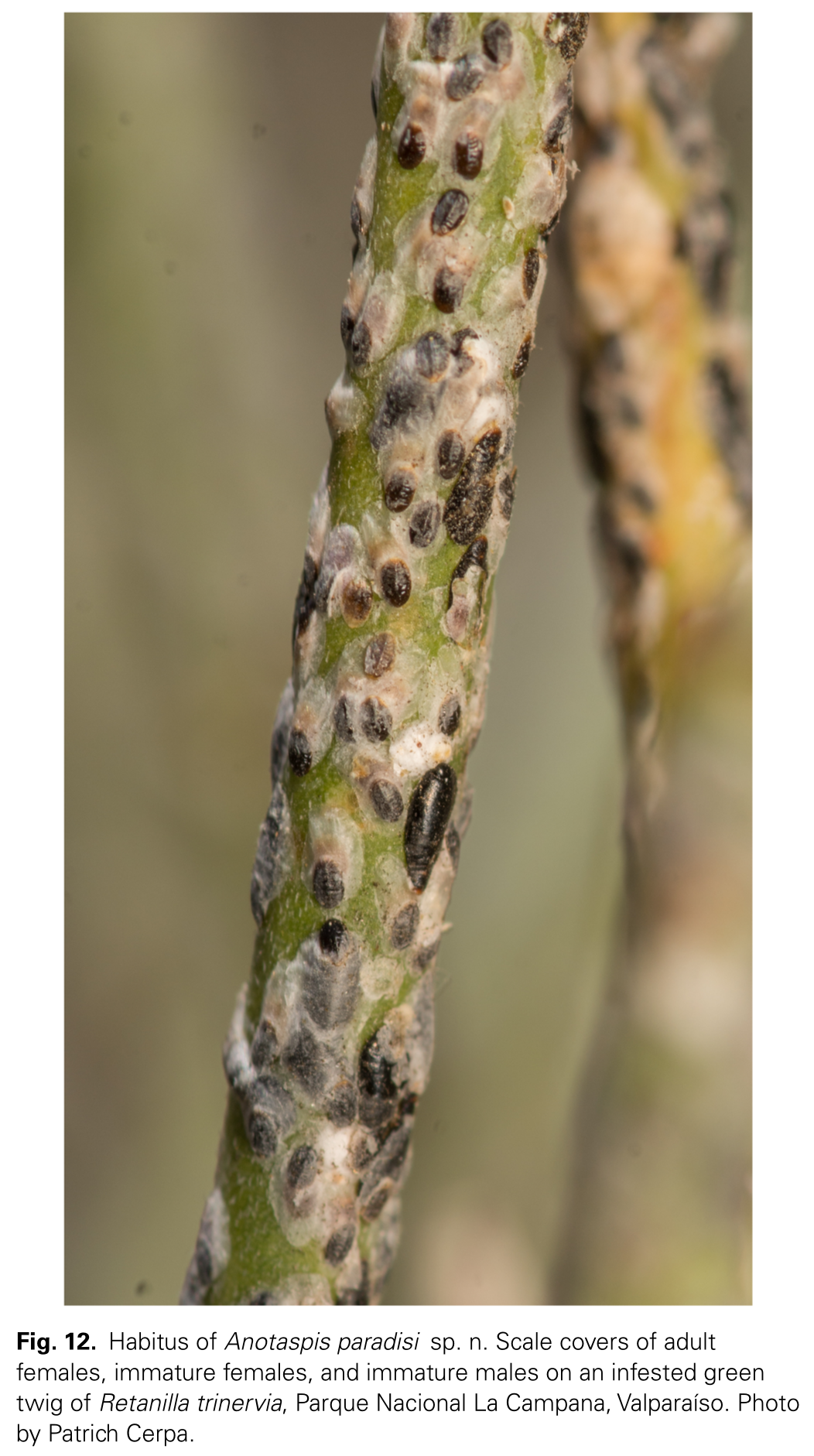
- Structure: In life, on green twig; puparium black, elongate; exuviae marginal, dark brown to black. On microscope slide, 870 to 890 μm long, 440 to 550 μm wide; body outline oval, broadest at mesothorax or metathorax; without indentations between any body segments. Cuticle membranous throughout. Antenna simple, with 4 setae. Perispiracular pores absent. Lobes absent. Plates absent. Gland spines absent. Gland tubercles absent. Dorsal ducts absent. Ventral microducts numerous, in submarginal and submedial areas of abdomen and submedial area of metathorax. (Normark et al. 2025)
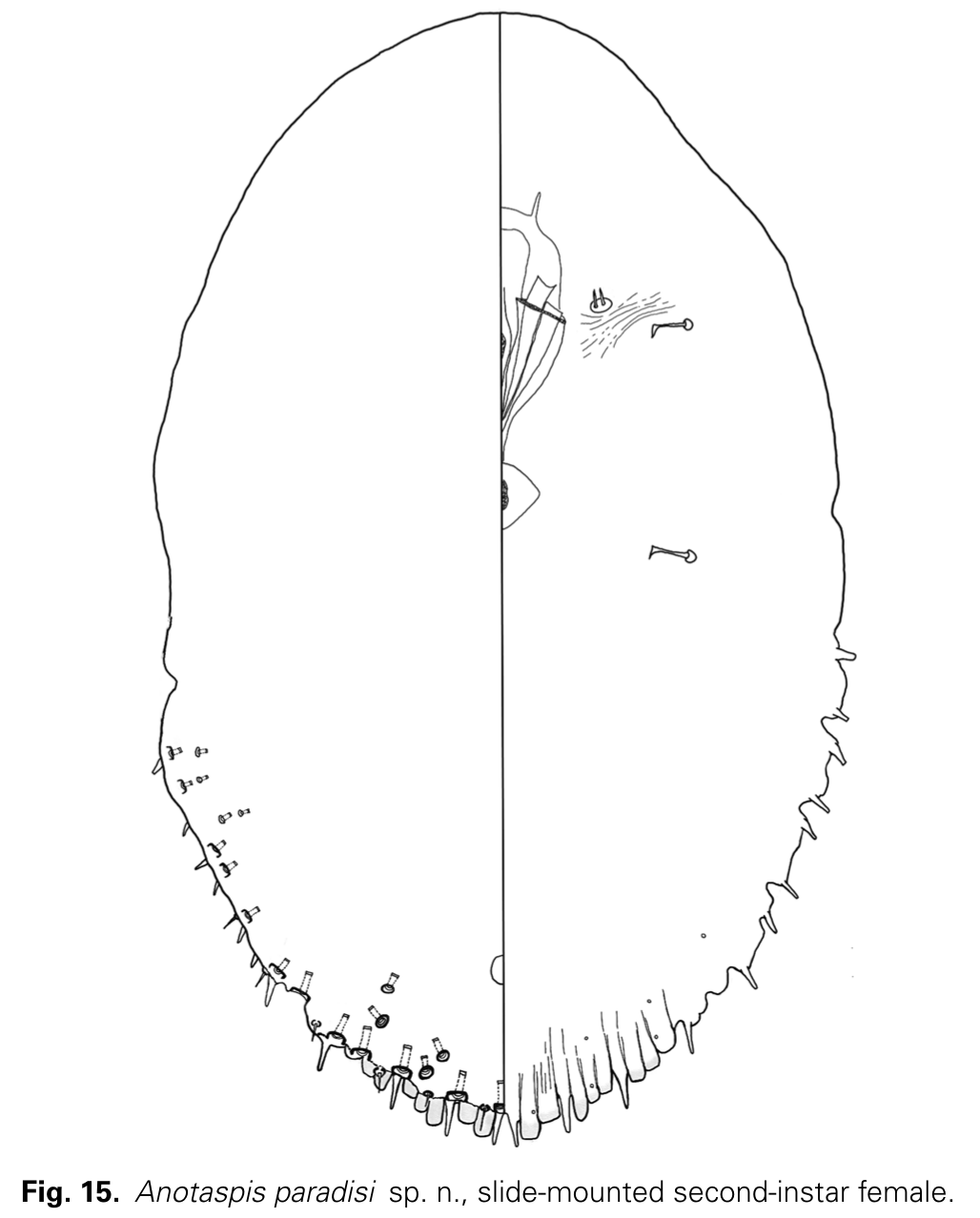
- General Remarks: See Normark et al. (2025) for description of adult female, puparium, and second-instar female; as well as color photo and illustrations.
Illustrations
Citations
- NormarNoCa2025: DNA sequencing, description, distribution, host, illustration, key, nymph, phylogeny, taxonomy, 12